What are structural rhinoplasty and semi-structural rhinoplasty? Comparison between the two methods
Tran Hoang
Rhinoplasty
Asked: 29/01/2026
Recently, I have come across two concepts: structural rhinoplasty and semi-structural rhinoplasty, but I do not clearly understand the differences. Doctor, could you please explain how these two methods differ, their respective advantages and disadvantages, and in which cases structural rhinoplasty should be chosen versus semi-structural rhinoplasty?
Hello,when learning about current rhinoplasty techniques, you will certainly come across the two concepts of structural rhinoplasty and semi-structural rhinoplasty. These are two advanced rhinoplasty techniques widely applied at many aesthetic facilities, including Gangwhoo Cosmetic Hospital. Although both aim to create a higher, more beautiful, and natural-looking nose, their nature differs significantly in terms of surgical technique, materials, and level of intervention. The doctor will analyze each method in detail so that you can have a clear understanding and choose the most suitable technique.
Understanding structural rhinoplasty and semi-structural rhinoplasty
Structural rhinoplasty
Structural rhinoplasty is a comprehensive surgical method, considered a “major operation” that reconstructs the entire nasal framework, including the nasal bridge, nasal tip, and columella. This technique combines high-grade synthetic cartilage (such as Nanoform or Surgiform) to build the nasal bridge, with autologous cartilage (harvested from the ear, septum, or rib) to cover the nasal tip, construct the columella, and stabilize the entire nasal framework.
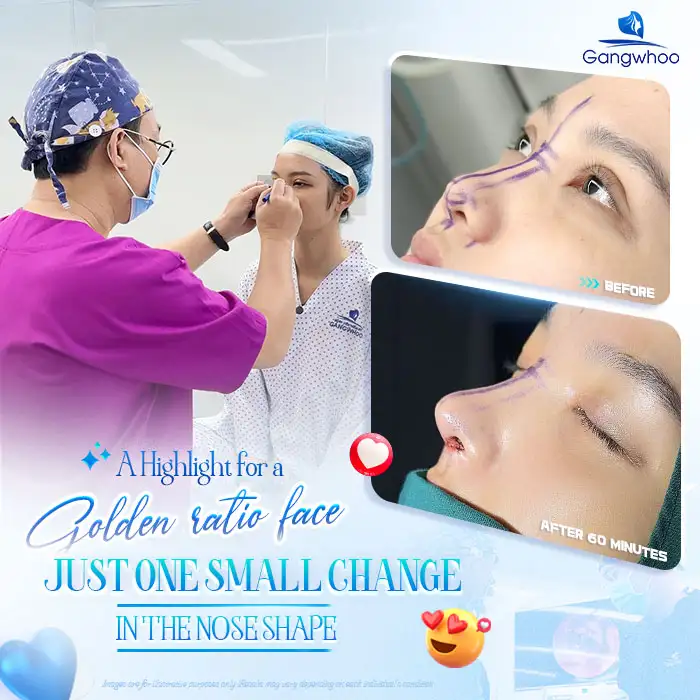
A golden highlight for the face with a perfectly high and beautiful nose after structural rhinoplasty
From a professional perspective, autologous cartilage increases biocompatibility and minimizes the risk of rejection and nasal tip contracture. Meanwhile, synthetic cartilage plays a shaping role, helping the nasal bridge appear high, straight, and natural.
This method is particularly suitable for:
Individuals with a low, flat nose, short nasal tip, or upturned nose
Individuals with a weak septum, deviated nose, or nasal deformity from previous surgery
Cases of failed rhinoplasty requiring full reconstruction of the supporting structure
Because this is a deeply invasive procedure, the recovery time for structural rhinoplasty is usually longer, around 10–14 days. In return, the nasal shape achieves height, refinement, and long-term stability lasting 10–20 years.
Semi-structural rhinoplasty
Semi-structural rhinoplasty is a less invasive technique that only partially intervenes in the nasal structure. The doctor mainly uses synthetic cartilage to augment the nasal bridge, combined with a small amount of autologous cartilage to cover the nasal tip, helping the tip appear soft and natural while preventing redness or shine-through.
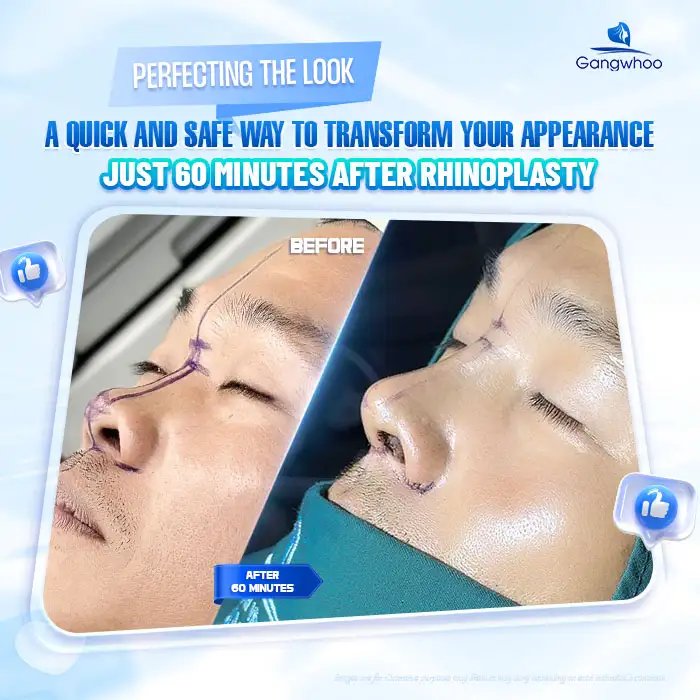
Harmoniously high nose and noticeable facial change after 60 minutes of procedure
This method is suitable for individuals whose nasal shape is already relatively harmonious and who only want to improve the height or slightly refine the nasal tip without full reconstruction.
The recovery time is faster, around 7–10 days, with less swelling and pain, and the cost is also lower compared to structural rhinoplasty. However, durability usually lasts only 7–10 years, and the corrective effect is more limited if the nose has multiple defects.
Comparison between structural rhinoplasty and semi-structural rhinoplasty
To help you visualize more easily, the doctor will point out the main differences between structural rhinoplasty and semi-structural rhinoplasty:
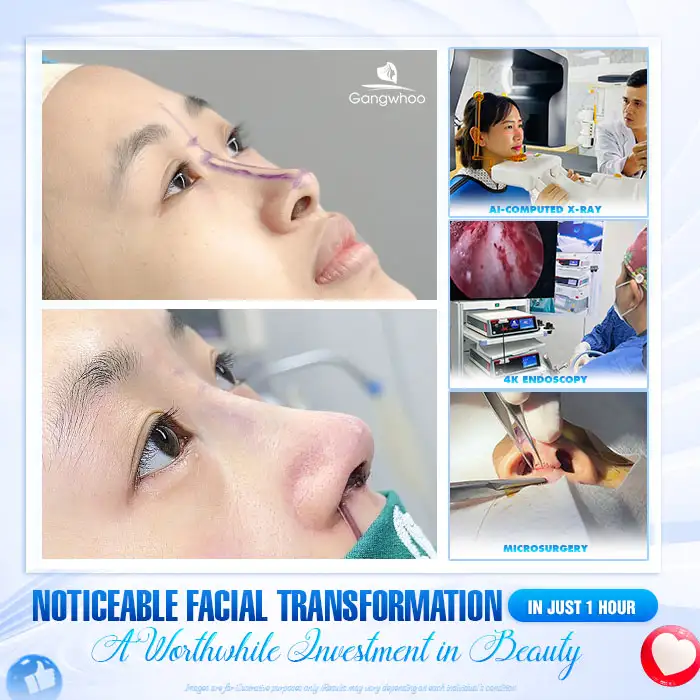
Clearly noticeable facial change after just one hour of rhinoplasty
Criteria
Structural rhinoplasty
Semi-structural rhinoplasty
Level of intervention
Comprehensive intervention, reconstructing the columella, nasal tip, and nasal bridge
Mild adjustment, mainly the nasal bridge and tip
Materials used
Combination of synthetic cartilage and autologous cartilage (ear, rib, septum)
High, able to correct failed, deviated, short, or upturned noses
Moderate, suitable for noses with minor defects
Recovery time
10–14 days
7–10 days
Durability
10–20 years
7–10 years
Aesthetic results
Comprehensive nasal transformation, high, natural, and proportionate to the face
Harmonious, soft, and subtle nasal shape
Cost
Higher
Lower
Suitable candidates
Individuals with failed or weak noses requiring full correction
Individuals with an already attractive nose seeking slight enhancement
From a professional standpoint, structural rhinoplasty is the most in-depth and durable solution in modern nasal surgery, while semi-structural rhinoplasty is a gentler option with minimal intervention yet still delivers high aesthetic results for patients with a good nasal foundation.
So which should you choose: structural or semi-structural rhinoplasty?
According to the doctor’s experience, the choice between structural rhinoplasty and semi-structural rhinoplasty should not be based on trends or cost, but rather on the individual nasal anatomy and personal aesthetic goals.
Elegant and refined nasal aesthetics with standardized procedures and flexible financial options at Gangwhoo Cosmetic Hospital
If you have a low nose, wide nasal bones, a short nasal tip, or have experienced failed surgery, then structural rhinoplasty is the most suitable choice. This method reconstructs the entire support system, ensuring a high, stable, and long-term safe nasal shape.
If your nose is already well-proportioned and you only need slight augmentation of the bridge or refinement of the tip for a softer appearance, then semi-structural rhinoplasty is the optimal option—saving recovery time while still achieving natural results.
At Gangwhoo Cosmetic Hospital, advanced technologies such as 4K endoscopic microsurgical rhinoplasty combined with Nanoform and Surgiform cartilage are applied in both techniques. These technologies help doctors precisely control cartilage placement, minimize invasiveness, shorten recovery time, and significantly reduce the risk of postoperative complications.
Hopefully, through the above sharing, you now have a clearer understanding of structural rhinoplasty and semi-structural rhinoplasty to make the most appropriate choice for your nasal condition.
If you are still uncertain about which nasal shape suits you best, the doctor recommends visiting Gangwhoo Cosmetic Hospital for a direct consultation. Here, a team of experienced nasal specialists will
I’ve heard that nowadays there are Nano breast implants without identification chips, which are different from implants with embedded chips. Doctor, could you explain exactly what Nano implants without chips are, what their advantages and disadvantages are, and whether I should choose this type? I’m a bit concerned about having a “chip” inside my body, […]
Doctor, after my rhinoplasty, I noticed that the tip of my nose feels a bit hard compared to normal, and it feels quite uncomfortable. I don’t know what causes this or whether it is a normal condition or an abnormal sign that requires a medical check-up. If this is a normal condition, what should I […]
I am interested in endoscopic breast augmentation because I’ve heard it is gentler than traditional methods. However, I am still a bit afraid of pain and concerned about risks after surgery. Doctor, could you tell me whether endoscopic breast augmentation is painful, what the procedure involves, and what should be noted after surgery to recover […]
Hello Doctor, I just underwent a rhinoplasty and am very concerned about post-operative care. Could you please advise me on the correct and scientific way to care for my nose after surgery so that it recovers quickly, reduces swelling and pain, and avoids complications? Additionally, I would like to know any important precautions during the […]
I am learning about nasal surgery and have seen many people share that rhinoplasty not only enhances beauty but also helps the face look more refined and boosts confidence. So, doctor, could you please share the practical benefits of rhinoplasty, and whether it is worth considering if my nose is slightly low but still balanced?
Doctor, my mother is 50 years old this year. She feels very self-conscious because her nasal bridge is low and slightly wide. I would like to ask whether older adults should undergo rhinoplasty, whether the surgery affects health, and at this age, which method would be the safest?