Hello, I understand that after rhinoplasty, many people tend to seek folk remedies to help reduce swelling and bruising more quickly—including applying bear bile after rhinoplasty. However, not all natural remedies are safe for sensitive post-surgical skin. I will explain in detail so you can clearly understand what is right and wrong about this practice from a medical and aesthetic surgery perspective.
Should bear bile be applied after rhinoplasty?
The answer is absolutely no—you should not apply bear bile after rhinoplasty.
Bear bile contains ursodeoxycholic acid and many strong enzymes, which are traditionally believed to help reduce inflammation and dissolve bruising. However, this theory only applies to intact, healthy skin. For post-rhinoplasty surgical wounds, applying bear bile poses many serious risks.
After rhinoplasty, the nasal skin and tissues are in a damaged, sensitive phase and require an absolutely sterile environment. If you apply bear bile to the surgical incision:
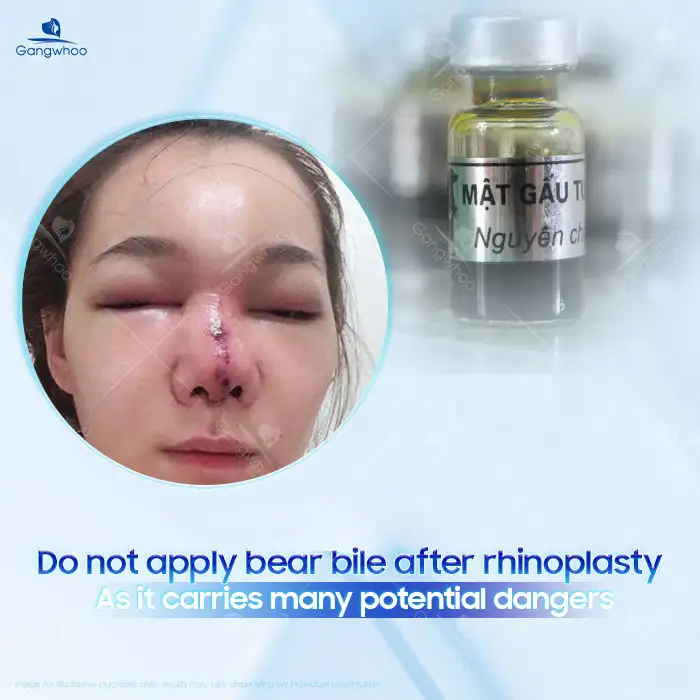
- The enzymes in bear bile may destroy newly formed granulation tissue, causing ulceration, delayed wound healing, or even nasal skin necrosis.
- Bear bile is not medically sterilized and may carry bacteria, impurities, or fungal spores, increasing the risk of infection and cellulitis.
- In some cases documented by doctors, applying bear bile after rhinoplasty has led to fluid accumulation, nasal tip necrosis, and even complete damage to the newly created nasal shape.
Therefore, according to medical standards, you should absolutely not apply any herbal remedies or natural substances to the nose after rhinoplasty unless specifically prescribed by your operating surgeon. Improper post-operative care can ruin the entire aesthetic result and may require revision surgery, which is both costly and detrimental to your health.
Possible complications if you self-apply bear bile after rhinoplasty
If you apply bear bile on your own after rhinoplasty, doctors warn of several serious complications, including:
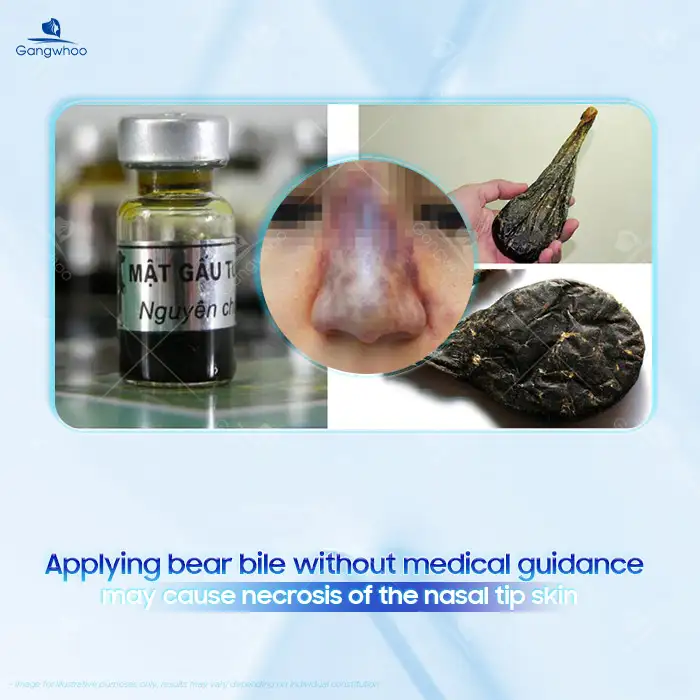
- Surgical site infection: Because bear bile is non-sterile, it can allow bacterial invasion, leading to redness, swelling, and purulent discharge.
- Nasal tip skin necrosis: The acids in bear bile can erode fragile new tissue, causing necrosis—especially in the thin skin of the nasal tip.
- Cartilage dissolution and implant exposure: When the skin is damaged, the tissue cannot adequately cover the nasal implant, making cartilage exposure more likely and ruining the nasal shape.
- Poor scarring and deformation: Deep inflammation or tissue damage can result in hypertrophic scars, contraction, and nasal tip deformity.
Some cases at Gangwhoo Cosmetic Hospital involved patients requiring revision surgery after applying bear bile or unverified traditional remedies, leading to thinning nasal skin, necrotizing inflammation, and exposure of artificial cartilage. Correcting these complications is far more complex and requires much longer recovery time than the initial rhinoplasty.
Standard medical care after rhinoplasty to promote proper healing
Instead of relying on folk remedies, you should strictly follow proper medical aftercare instructions to ensure optimal healing and long-lasting nasal shape:

- Keep the nasal area clean: Use saline solution and medical cotton swabs to gently clean around the incision daily; avoid contact with dirty water, cosmetics, or dust.
- Cold compresses during the first 2 days: Helps reduce swelling and bruising and supports blood circulation. After 3 days, switch to gentle warm compresses.
- Take medications as prescribed: Including antibiotics, pain relievers, and anti-swelling medication. Never self-medicate or apply topical substances on your own.
- Avoid scar-promoting foods: Such as seafood, beef, water spinach, sticky rice products, and alcoholic or stimulating beverages.
- Sleep on your back with your head elevated: Helps prevent blood pooling in the nasal area and reduces swelling more quickly.
- Attend follow-up appointments: So the doctor can monitor healing and promptly address any abnormalities.
At Gangwhoo Cosmetic Hospital, post-operative care protocols are always clearly guided and closely monitored by doctors. The hospital applies 4K microsurgical endoscopic rhinoplasty techniques and uses high-end implants such as Surgiform and Nanoform, helping minimize swelling, avoid scarring, and ensure a natural, soft nasal shape.
Doctor’s conclusion:
Applying bear bile after rhinoplasty is completely inadvisable and can seriously harm both the aesthetic outcome and the health of your nose. The best approach is to follow proper medical instructions, attend all follow-up visits, and absolutely avoid unsupported folk remedies.
If you experience prolonged swelling, bruising, or suspect infection after surgery, please visit Gangwhoo Cosmetic Hospital immediately for examination and safe, timely treatment by a nasal specialist.


