Will rhinoplasty leave scars, and how should it be cared for to ensure good healing?
Van Minh
Rhinoplasty
Asked: 23/12/2025
Will rhinoplasty leave scars? If so, how should the wound be cared for so that the scar heals well without becoming raised or darkened? Could you please give me some specific advice?
Hello, this is one of the questions doctors receive very frequently: “Will rhinoplasty leave scars? Is there a risk of hypertrophic or keloid scarring after rhinoplasty?” From a medical perspective, I will analyze this in detail so you can have the most accurate answer and feel more at ease before making a decision.
Will rhinoplasty leave scars?
The answer is that rhinoplasty can leave scars, but this does not occur in all cases. Typically, the incision for rhinoplasty is very small and placed in discreet locations such as inside the nostrils or at the base of the columella. Therefore, the risk of visible rhinoplasty scars to the naked eye is very low.
However, in clients with a scar-prone tendency, improper postoperative care, or inaccurate suturing techniques, the possibility of hypertrophic or keloid scarring after rhinoplasty, and even tissue protrusion, may occur. The most important factor is to undergo the procedure at a reputable facility with a qualified aesthetic surgeon performing the surgery directly, combined with proper wound care as instructed, to minimize the risk of post-rhinoplasty scarring.
Scar fading timeline after rhinoplasty
Normally, the postoperative wound heals through the following stages:
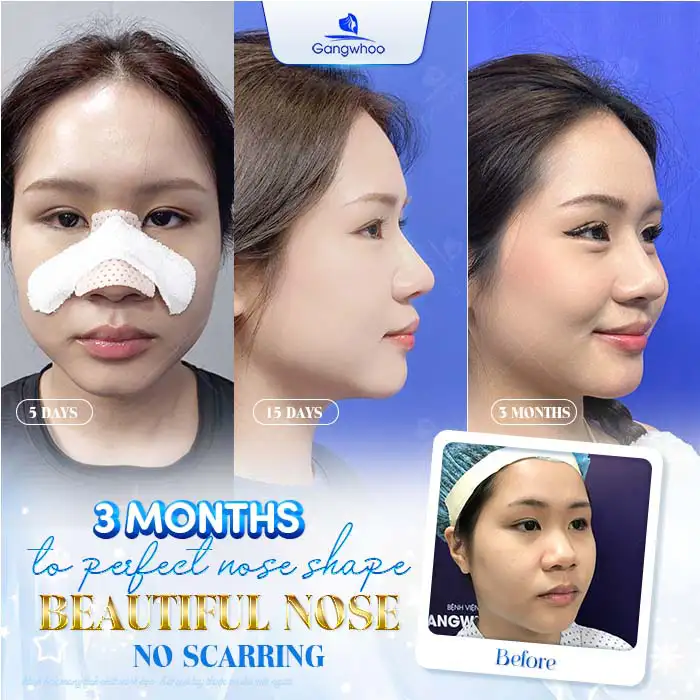
First 1–2 weeks: The incision begins to epithelialize, and a light pink scar line may appear.
After 1–3 months: The scar gradually fades, fibrous tissue stabilizes, and the nasal area looks more natural.
Around 6–12 months: With proper care, the scar almost disappears and is difficult to notice with the naked eye.
However, in individuals prone to hypertrophic or keloid scarring, raised scars after rhinoplasty may persist longer. In such cases, doctors often recommend combined treatments such as anti-scar injections, the use of post-rhinoplasty scar creams, or laser technology to help the scar fade more quickly.
Factors that cause scarring after rhinoplasty
Not everyone experiences hypertrophic scarring after rhinoplasty. Some key risk factors that can lead to scar formation include:
Keloid-prone tendency: This is the most important factor, making wounds more likely to develop abnormal fibrous tissue and unsightly scars.
Surgical technique: Inaccurate incisions, non-refined suturing, or the use of low-quality materials can easily irritate the wound and lead to scarring.
Postoperative care: Improper wound cleansing, self-removal of sutures, sun exposure, or consuming foods that may stimulate scarring (such as seafood, beef, glutinous rice) can all result in tissue protrusion or visible scars.
Postoperative infection: If the wound becomes infected, the resulting scar tissue will be thicker and darker than normal.
How to care for your nose after rhinoplasty to prevent unsightly scars
To minimize the risk of scarring after rhinoplasty, doctors recommend paying attention to the following principles:
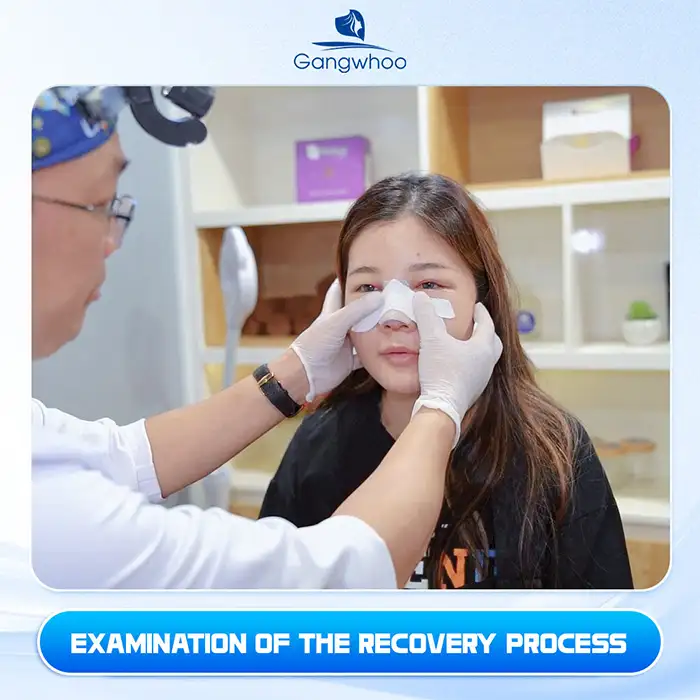
Follow medical instructions: Take medications, attend follow-up visits, and have sutures removed according to schedule.
Clean the wound gently: Keep the nasal area clean and dry, and avoid excessive touching or pressure.
Protect the skin from sunlight: UV exposure can cause scars to darken and harden; cover the area carefully and use sunscreen as directed when going outdoors.
Maintain a proper diet: Limit seafood, water spinach, beef, and glutinous foods during the early recovery period to avoid scar stimulation.
Use post-rhinoplasty scar treatments: Apply medically indicated scar creams, especially for individuals at risk of hypertrophic scarring.
When these guidelines are followed correctly, most clients recover well without unsightly scars or tissue protrusion.
If you are concerned about scarring or worried about the risk of hypertrophic scarring after rhinoplasty, you can visit Gangwhoo Cosmetic Hospital directly to be examined and advised by a specialist in aesthetic surgery for the most appropriate management. With refined suturing techniques, standardized medical procedures, and personalized postoperative care protocols, Gangwhoo has helped many clients with scar-prone tendencies achieve beautiful, natural-looking noses without unsightly scars.
Hello Doctor, I am considering rhinoplasty to improve the shape of my nose because my nose is quite low and the tip is slightly wide, making my overall facial features look less harmonious. However, after researching, I found that there are many cosmetic hospitals and spas advertising rhinoplasty services, so I am quite confused about […]
I’ve heard that nowadays there are Nano breast implants without identification chips, which are different from implants with embedded chips. Doctor, could you explain exactly what Nano implants without chips are, what their advantages and disadvantages are, and whether I should choose this type? I’m a bit concerned about having a “chip” inside my body, […]
Doctor, after my rhinoplasty, I noticed that the tip of my nose feels a bit hard compared to normal, and it feels quite uncomfortable. I don’t know what causes this or whether it is a normal condition or an abnormal sign that requires a medical check-up. If this is a normal condition, what should I […]
I am interested in endoscopic breast augmentation because I’ve heard it is gentler than traditional methods. However, I am still a bit afraid of pain and concerned about risks after surgery. Doctor, could you tell me whether endoscopic breast augmentation is painful, what the procedure involves, and what should be noted after surgery to recover […]
Hello Doctor, I just underwent a rhinoplasty and am very concerned about post-operative care. Could you please advise me on the correct and scientific way to care for my nose after surgery so that it recovers quickly, reduces swelling and pain, and avoids complications? Additionally, I would like to know any important precautions during the […]
I am learning about nasal surgery and have seen many people share that rhinoplasty not only enhances beauty but also helps the face look more refined and boosts confidence. So, doctor, could you please share the practical benefits of rhinoplasty, and whether it is worth considering if my nose is slightly low but still balanced?