How long after rhinoplasty can revision surgery be performed? In which cases is revision necessary?
Ngoc Lan
Rhinoplasty
Asked: 02/12/2025
I have just had a rhinoplasty and would like to ask the doctor how long after rhinoplasty revision surgery can be done? In cases where the nose becomes crooked or does not turn out as desired, what is the revision process and when is the appropriate time to intervene?
Hello, the doctor understands that after undergoing rhinoplasty, many patients still worry about the possibility of needing a revision if the nasal shape does not meet expectations. This is a very common concern, especially the question “how long after rhinoplasty can revision surgery be performed?”. To help you feel more at ease, the doctor will analyze each relevant aspect in detail.
How long after rhinoplasty can revision surgery be performed?
In general, the timeframe for revision after rhinoplasty depends on each individual’s recovery progress and the condition of the nasal tissues. Medically speaking, after a rhinoplasty, the body needs time for the soft tissues, cartilage, and nasal skin to stabilize. On average, about 6 months to 1 year is the most suitable period to proceed with revision surgery.
If revision is done too early while the tissues have not fully healed, further intervention may cause additional damage, increase the risk of complications, and lead to unsatisfactory results. However, in certain special situations such as severe infection, implant displacement, or significant deviation affecting health, the doctor may indicate earlier intervention, usually around 2–3 months after the initial surgery.
Therefore, to accurately determine how long after rhinoplasty revision surgery can be performed, you need to be examined directly so the doctor can assess tissue healing, the level of complications (if any), and choose the safest time for intervention.
In which cases is rhinoplasty revision required?
Not every rhinoplasty requires revision. However, in practice, there are certain cases where revision is necessary:
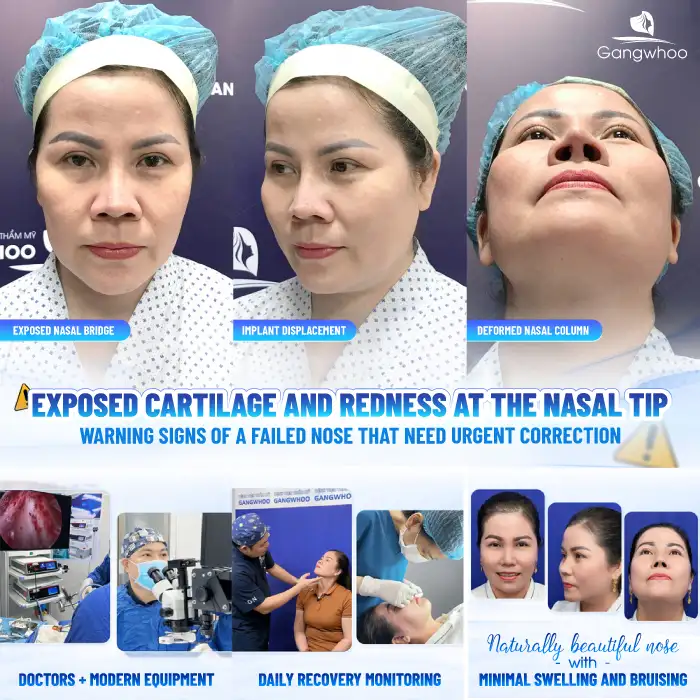
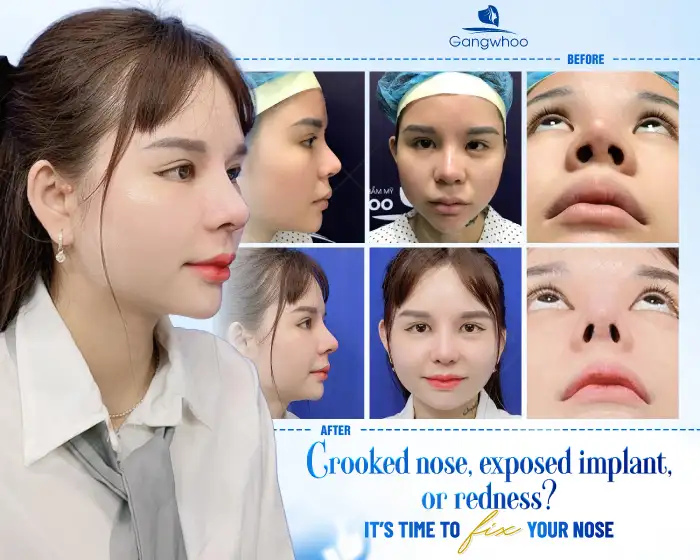
Crooked or deviated nose: This is a common complication and may be due to individual anatomy or the skill of the initial surgeon.
Infection or inflammation: If not treated promptly, it can cause nasal skin necrosis, requiring implant removal and reoperation.
Unsatisfactory nasal shape after surgery: For example, the nasal bridge is too high, the tip is too sharp, or the nose is not harmonious with the face.
Implant material incompatible with the body: Some patients experience material rejection, resulting in prolonged swelling and inflammation.
Appearance of complications: Such as redness, implant displacement, or implant exposure.
Nasal shape no longer fits current aesthetic trends: Some patients wish to change to a more delicate and natural nasal shape compared to the previous one.
Factors affecting rhinoplasty revision
The success of revision surgery depends on many factors:
Implant material: If low-quality artificial implants were used initially, revision will be more difficult. In contrast, using high-grade biocompatible implants or autologous cartilage allows for safer and more aesthetic revision.
Individual biological characteristics: Some individuals are prone to keloid scarring or tissue adhesion, which can affect nasal softness after revision.
Surgeon’s expertise: This is a key factor. Revision rhinoplasty requires higher technical skill than primary rhinoplasty because the nasal structure has already been altered.
Postoperative care: Proper care and adherence to instructions help speed up healing and stabilize results.
Which rhinoplasty methods offer long-lasting results with less need for revision?
To minimize the need for future revision, you may consider methods using advanced materials:
Nanoform cartilage rhinoplasty: This biocompatible implant has a special microstructure that adheres firmly to nasal tissues, reduces displacement, and feels soft similar to natural tissue. Results are long-lasting and safe.
Surgiform cartilage rhinoplasty: FDA-approved in the United States, Surgiform is a premium material with excellent biocompatibility. It optimally protects the nasal tip and significantly reduces the risk of redness and implant exposure.
Both methods help maintain a stable nasal shape for many years and limit the need for revision surgery.
Above is a detailed analysis to help you clearly understand how long after rhinoplasty revision surgery can be performed, along with indications for revision, influencing factors, and more durable methods. If you are still concerned or wish to have your nasal condition evaluated, the doctor advises you to visit Gangwhoo Cosmetic Hospital directly for a thorough consultation and the safest, most suitable solution.
I’ve heard that nowadays there are Nano breast implants without identification chips, which are different from implants with embedded chips. Doctor, could you explain exactly what Nano implants without chips are, what their advantages and disadvantages are, and whether I should choose this type? I’m a bit concerned about having a “chip” inside my body, […]
Doctor, after my rhinoplasty, I noticed that the tip of my nose feels a bit hard compared to normal, and it feels quite uncomfortable. I don’t know what causes this or whether it is a normal condition or an abnormal sign that requires a medical check-up. If this is a normal condition, what should I […]
I am interested in endoscopic breast augmentation because I’ve heard it is gentler than traditional methods. However, I am still a bit afraid of pain and concerned about risks after surgery. Doctor, could you tell me whether endoscopic breast augmentation is painful, what the procedure involves, and what should be noted after surgery to recover […]
Hello Doctor, I just underwent a rhinoplasty and am very concerned about post-operative care. Could you please advise me on the correct and scientific way to care for my nose after surgery so that it recovers quickly, reduces swelling and pain, and avoids complications? Additionally, I would like to know any important precautions during the […]
I am learning about nasal surgery and have seen many people share that rhinoplasty not only enhances beauty but also helps the face look more refined and boosts confidence. So, doctor, could you please share the practical benefits of rhinoplasty, and whether it is worth considering if my nose is slightly low but still balanced?
Doctor, my mother is 50 years old this year. She feels very self-conscious because her nasal bridge is low and slightly wide. I would like to ask whether older adults should undergo rhinoplasty, whether the surgery affects health, and at this age, which method would be the safest?