Hello, doctor understands that after rhinoplasty, many patients are concerned about medication use, especially antibiotics—such as how long antibiotics should be taken after rhinoplasty, whether they are necessary, and what should be noted to ensure quick healing and avoid complications. This is a very important question, as proper medication use directly affects the recovery process and final aesthetic outcome. The doctor will explain this in detail for you.
How long should antibiotics be taken after rhinoplasty?
In general, the duration of antibiotic use after rhinoplasty depends on the type of surgery, the extent of intervention, as well as each individual’s health condition and healing capacity. However, according to standard medical treatment protocols, antibiotics are typically prescribed for 5–7 days after rhinoplasty.

Antibiotics play a role in preventing infection at the surgical site, especially during the early stage when the wound is still open and soft tissues are regenerating. For structural rhinoplasty cases involving rib cartilage or deeper surgical intervention, the doctor may prescribe antibiotics for a longer period, approximately 7–10 days, to ensure maximum safety.
However, medication must be taken strictly according to the surgeon’s instructions. Patients should not stop earlier or prolong the course on their own, as this may reduce treatment effectiveness or lead to antibiotic resistance.
Is it necessary to take antibiotics after rhinoplasty? Why?
The answer is yes—you must take antibiotics after rhinoplasty exactly as prescribed by your doctor. After rhinoplasty, the body has undergone a surgical procedure—even if it is considered minor surgery, it still creates wounds in the soft tissue and cartilage. Without antibiotic protection, bacteria may enter and cause inflammation, pus formation, or even severe infection that requires implant removal.

In addition, antibiotics help reduce the risk of prolonged swelling and inflammation, support faster stabilization of the nose, and minimize skin redness or fluid accumulation. Therefore, even if you feel well, you should not discontinue the medication on your own. Any changes in dosage or type of medication must be approved by a qualified aesthetic specialist.
Important principles for taking medication after rhinoplasty
To ensure optimal effectiveness of antibiotics after rhinoplasty, you should follow these key principles:
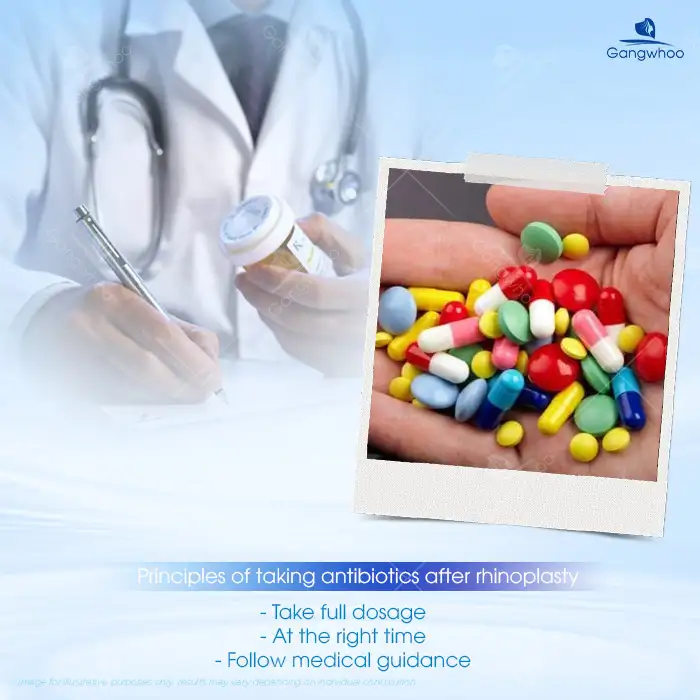
- Take the full dose on time as prescribed; do not reduce the dosage or stop the medication when you start to feel better.
- Do not take antibiotics together with alcohol, beer, or caffeine-containing beverages, as they may reduce the drug’s effectiveness.
- If signs of allergy occur—such as rash, itching, nausea, or dizziness—stop the medication and contact your doctor immediately.
- Combine medication with proper care: keep the wound dry and clean, avoid touching or squeezing the nose, and do not remove bandages or sutures prematurely.
At Gangwhoo Cosmetic Hospital, after rhinoplasty, all clients are prescribed a personalized medication regimen including antibiotics, anti-inflammatory drugs, pain relievers, along with detailed home-care instructions. In particular, Gangwhoo applies 4K endoscopic microsurgical rhinoplasty techniques, which allow precise manipulation with minimal invasiveness, thereby reducing swelling and inflammation and shortening the duration of antibiotic use.
The duration of antibiotic use after rhinoplasty depends on individual medical indication, but typically ranges from 5–7 days. Most importantly, you should strictly follow the doctor’s instructions and not change or discontinue medication on your own. If you undergo rhinoplasty at Gangwhoo Cosmetic Hospital, the team of nasal surgery specialists will closely monitor you, prescribe appropriate medication, and provide detailed aftercare guidance to ensure a smooth recovery and a natural, harmonious nasal shape.
If you are preparing for rhinoplasty or need further advice regarding medication use after surgery, you may visit Gangwhoo Cosmetic Hospital directly for in-depth examination and professional consultation.


