Is it okay to eat fish sauce after rhinoplasty? Does it cause any negative effects?
Linh Dan
Rhinoplasty
Asked: 30/01/2026
I have a habit of dipping food in fish sauce—whether it’s rice or noodles, it doesn’t taste good to me without it. However, I heard from a friend that after rhinoplasty, fish sauce should be avoided because it may slow wound healing. In reality, is it okay to eat fish sauce after rhinoplasty, and if so, are there any precautions I should be aware of?
Hello,after rhinoplasty, diet plays an important role in helping the wound heal quickly and minimizing poor scarring. One question doctors receive quite frequently is “Is it okay to eat fish sauce after rhinoplasty?”—because this is a familiar condiment that is almost indispensable in daily meals. So, should fish sauce actually be used after rhinoplasty surgery or not? The doctor will explain this in detail from a medical perspective so that you can better understand.
Is it okay to eat fish sauce after rhinoplasty?
The doctor’s answer is as follows: You can eat fish sauce after rhinoplasty; however, it should be consumed properly and at an appropriate time.
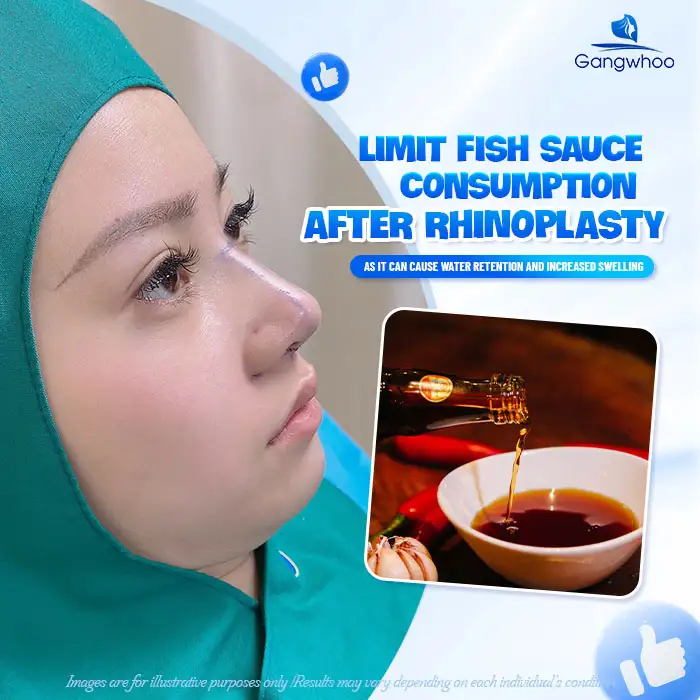
Limit fish sauce consumption after rhinoplasty as it can easily cause fluid retention and increase nasal swelling
In essence, fish sauce is not an inflammatory food and does not directly affect the wound. The main components of fish sauce are hydrolyzed fish protein, salt, and certain amino acids beneficial to the body, which do not cause hypertrophic scarring or delay wound healing.
However, the issue lies in its high salt content and strong salinity. Shortly after rhinoplasty, if you consume overly salty foods, your body may retain water, leading to increased swelling and a higher risk of fluid accumulation in the nasal area. In addition, some industrial fish sauces contain preservatives or flavoring agents that may irritate the nasal mucosa in sensitive individuals.
Therefore, during the first 10–14 days after surgery, doctors advise you to limit fish sauce consumption, especially concentrated, salty, or strong-smelling types. Once the nose has stabilized, the wound is dry, and swelling has subsided, you may resume normal consumption but should dilute it and use small amounts for dipping instead of pouring it directly over food.
Types of dipping sauces that can be used and should be avoided after rhinoplasty
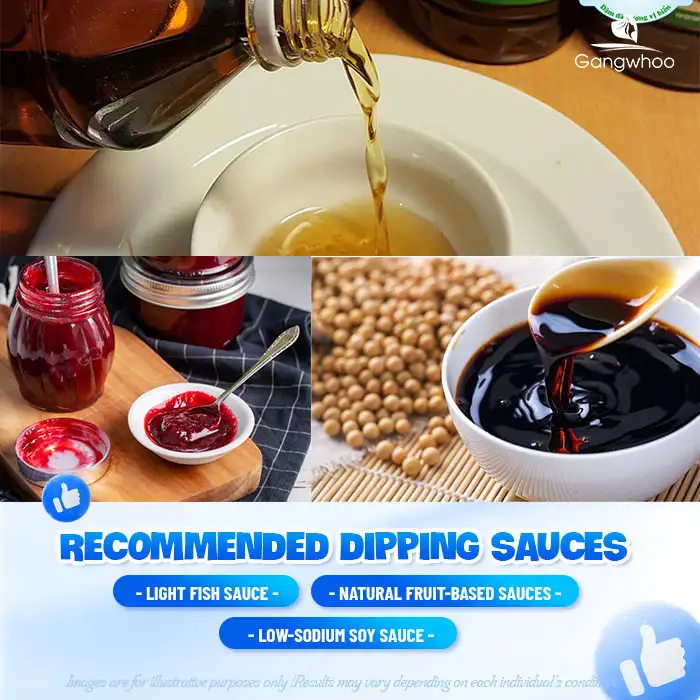
After rhinoplasty, you may still use some dipping sauces that are mild, low in salt, and not spicy, such as:
Low-sodium soy sauce, diluted with lemon juice or boiled garlic.
Light fish sauce mixed with cooled boiled water to reduce saltiness.
Ginger dipping sauce or natural fruit-based sauces (passion fruit, orange, pineapple, etc.) to boost vitamin C intake and support tissue healing.
Conversely, you should avoid or limit the following dipping sauces:
Shrimp paste, fermented fish paste, fermented fish sauces: strong odors that may trigger inflammatory reactions.
Chili sauce, satay, chili fish sauce: spicy heat causes vasodilation, easily increasing nasal redness and swelling.
Bottled dipping sauces containing many preservatives or MSG: not beneficial for the immune system during recovery.
Overall, the principle is to eat lightly, avoid spicy foods, and refrain from strong-smelling items to help the nose recover quickly and maintain stable results.
Dietary notes after rhinoplasty
In addition to wondering whether it is okay to eat fish sauce after rhinoplasty, you should also pay attention to your overall postoperative nutrition, as this is a key factor in ensuring fast healing and preventing complications:
Supplement vegetables and fruits rich in vitamins C, A, and E
Increase protein and natural collagen intake from lean meat, eggs, milk, white fish, or bone broth.
Consume vegetables and fruits rich in vitamins C, A, and E such as oranges, carrots, and spinach to support anti-inflammatory effects and tissue regeneration.
Drink enough water (about 2 liters per day) to support blood circulation and reduce swelling.
Strictly avoid: beef, seafood, glutinous rice products, water spinach, alcohol, coffee, and cigarettes for at least the first 3–4 weeks.
At Gangwhoo Cosmetic Hospital, after each rhinoplasty procedure, doctors provide detailed guidance on individualized diet and postoperative care to ensure stable nasal shape and prevent complications.
Modern technologies such as 4K micro-endoscopic rhinoplasty combined with Nanoform and Surgiform synthetic cartilage help secure nasal shaping, achieve natural results, and minimize swelling and inflammation.
If you happen to consume fish sauce early or notice unusual redness or swelling, you should visit Gangwhoo Cosmetic Hospital for prompt examination and timely medical advice from a specialist.
I am interested in endoscopic breast augmentation because I’ve heard it is gentler than traditional methods. However, I am still a bit afraid of pain and concerned about risks after surgery. Doctor, could you tell me whether endoscopic breast augmentation is painful, what the procedure involves, and what should be noted after surgery to recover […]
Hello Doctor, I just underwent a rhinoplasty and am very concerned about post-operative care. Could you please advise me on the correct and scientific way to care for my nose after surgery so that it recovers quickly, reduces swelling and pain, and avoids complications? Additionally, I would like to know any important precautions during the […]
I am learning about nasal surgery and have seen many people share that rhinoplasty not only enhances beauty but also helps the face look more refined and boosts confidence. So, doctor, could you please share the practical benefits of rhinoplasty, and whether it is worth considering if my nose is slightly low but still balanced?
Doctor, my mother is 50 years old this year. She feels very self-conscious because her nasal bridge is low and slightly wide. I would like to ask whether older adults should undergo rhinoplasty, whether the surgery affects health, and at this age, which method would be the safest?
I really enjoy spicy food, but I had rhinoplasty just one week ago. Many people say that spicy food should be completely avoided, but I’m not sure if that’s true. So is it harmful to eat spicy food after rhinoplasty, and if it is allowed, what level would be considered safe?
I’ve heard that the S-Line nose shape looks natural and soft, but some people experience complications after S-Line rhinoplasty such as deviation or redness and shininess. So in reality, what are the risks of this nose shape, and what should I pay attention to beforehand to avoid complications?