Is Synthetic Cartilage Rhinoplasty Permanent? Long-Term Maintenance Care
Thanh Nha
Rhinoplasty
Asked: 20/01/2026
I had a rhinoplasty using synthetic cartilage more than two years ago. Currently, my nose still looks fine, but I have heard that synthetic cartilage has a certain lifespan and is not permanent. So may I ask whether rhinoplasty with synthetic cartilage is permanent, and are there any care methods to help maintain the nasal shape for a longer time?
Hello, the doctor understands that before deciding on surgery, many clients are often concerned about the durability of the nasal shape after rhinoplasty, especially when choosing the method of synthetic cartilage rhinoplasty. So, is synthetic cartilage rhinoplasty permanent, and does it require revision after a certain period of time? The doctor will help you clearly understand the medical nature of this type of cartilage as well as the factors affecting its longevity, giving you a comprehensive and accurate perspective.
Is synthetic cartilage rhinoplasty permanent?
The doctor affirms that synthetic cartilage rhinoplasty is not absolutely permanent; however, if performed using proper techniques and followed by appropriate postoperative care, the nasal shape can remain stable for 15 to over 20 years, or even longer depending on individual physiology.
Currently, in rhinoplasty procedures, doctors commonly use high-grade synthetic materials such as medical-grade silicone, Gore-Tex, or Softxil. These materials have been certified for safety by the FDA (United States) and CE (Europe), offering high biocompatibility and minimizing the risk of rejection or complications.
Regarding the mechanism of longevity:
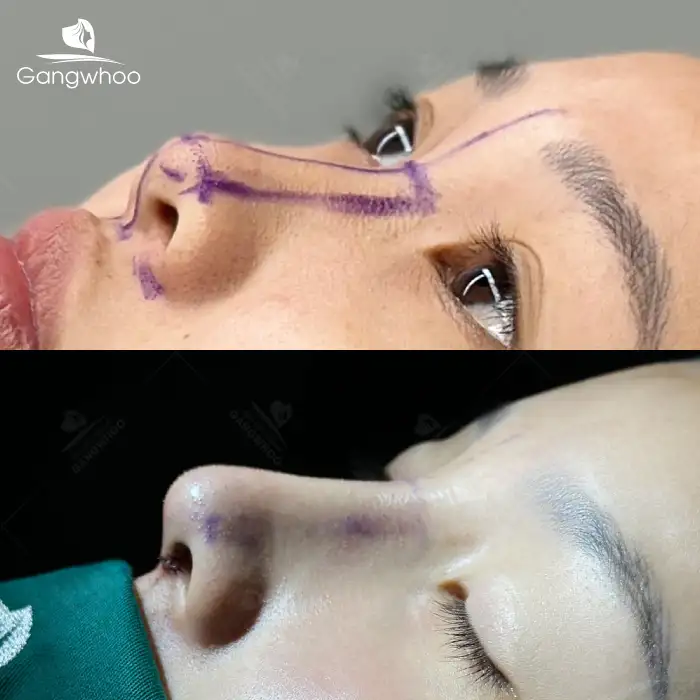
A beautifully elevated, soft nasal shape just completed
After being placed along the nasal bridge, the synthetic cartilage is encapsulated and stabilized by surrounding tissues, creating long-term stability.
However, over time, factors such as skin aging, soft tissue contraction, trauma, or improper surgical technique may cause slight displacement, implant visibility, or redness at the nasal tip—this is why doctors often describe the result as “long-lasting” rather than “absolutely permanent.”
If performed at a reputable hospital, using authentic materials and by a highly qualified plastic surgeon, the nasal shape can remain natural for many years without requiring revision.
At Gangwhoo Cosmetic Hospital, all synthetic cartilage materials are officially imported, fully certified with clear origins, and directly performed by board-certified plastic surgeons—helping minimize risks and ensure long-term nasal stability.
Factors affecting the longevity of rhinoplasty results
The duration of rhinoplasty results depends on multiple medical factors and individual lifestyle habits, including:
Quality of synthetic cartilage
A perfectly shaped nose after 30 days
High-quality materials (such as Gore-Tex, Softxil, MegaDerm) adhere well to tissues, reducing contraction or displacement over time. In contrast, low-cost or substandard implants may deform after a few years.
Surgical technique of the doctor
The same person, but after 30 days of rhinoplasty, her appearance has noticeably transformed
This is the key factor determining durability. When the implant is placed in the correct anatomical layer, aligned properly, and soft tissues are handled appropriately, the nasal shape can remain stable for a very long time. Conversely, even a slight deviation during placement may later cause bending, asymmetry, or implant visibility.
Individual physiology and nasal tissue characteristics
Thin nasal skin is more prone to redness or implant visibility, while thicker skin and stronger tissue tend to maintain shape better. Additionally, individual aging rates also affect the longevity of results.
Postoperative care and lifestyle habits
Following postoperative instructions carefully, avoiding strong impacts, improper sleeping positions, or early overuse of cosmetics will help the implant stabilize faster and maintain the nasal shape longer.
At Gangwhoo, doctors always provide personalized consultations tailored to each individual’s physiology. As a result, the rate of stable nasal shape maintenance for over 10 years exceeds 95%—a very high figure in aesthetic rhinoplasty.
Postoperative care for synthetic cartilage rhinoplasty to maintain a durable and beautiful nasal shape
To help maintain long-term rhinoplasty results, the doctor recommends strictly following these postoperative care guidelines:
Keep the nasal area clean and dry, and avoid touching or manipulating it for at least the first month.
Avoid sleeping on your side or face down to prevent implant displacement.
Avoid wearing heavy glasses during the first 4–6 weeks, as pressure on the nasal bridge may affect the shape.
Supplement foods rich in vitamin C, zinc, and protein to promote healing, and avoid foods that may cause scarring or inflammation (such as seafood, beef, and sticky rice products).
Attend regular follow-up visits as instructed to promptly address any abnormal signs such as swelling, inflammation, nasal tip redness, or discomfort.
In addition, at Gangwhoo Cosmetic Hospital, clients are closely monitored throughout the recovery process. Each surgical case is documented and followed up periodically to ensure long-term nasal stability and facial harmony.
If you are still wondering whether synthetic cartilage rhinoplasty is permanent, the doctor advises visiting Gangwhoo Cosmetic Hospital for a direct consultation. Here, a team of board-certified plastic surgeons will assess your nasal structure, recommend the most suitable cartilage type, and apply advanced technologies such as 4D structural rhinoplasty and endoscopic septal correction—ensuring not only long-lasting aesthetic results but also absolute safety for your health. “`
Hello Doctor, I am considering rhinoplasty to improve the shape of my nose because my nose is quite low and the tip is slightly wide, making my overall facial features look less harmonious. However, after researching, I found that there are many cosmetic hospitals and spas advertising rhinoplasty services, so I am quite confused about […]
I’ve heard that nowadays there are Nano breast implants without identification chips, which are different from implants with embedded chips. Doctor, could you explain exactly what Nano implants without chips are, what their advantages and disadvantages are, and whether I should choose this type? I’m a bit concerned about having a “chip” inside my body, […]
Doctor, after my rhinoplasty, I noticed that the tip of my nose feels a bit hard compared to normal, and it feels quite uncomfortable. I don’t know what causes this or whether it is a normal condition or an abnormal sign that requires a medical check-up. If this is a normal condition, what should I […]
I am interested in endoscopic breast augmentation because I’ve heard it is gentler than traditional methods. However, I am still a bit afraid of pain and concerned about risks after surgery. Doctor, could you tell me whether endoscopic breast augmentation is painful, what the procedure involves, and what should be noted after surgery to recover […]
Hello Doctor, I just underwent a rhinoplasty and am very concerned about post-operative care. Could you please advise me on the correct and scientific way to care for my nose after surgery so that it recovers quickly, reduces swelling and pain, and avoids complications? Additionally, I would like to know any important precautions during the […]
I am learning about nasal surgery and have seen many people share that rhinoplasty not only enhances beauty but also helps the face look more refined and boosts confidence. So, doctor, could you please share the practical benefits of rhinoplasty, and whether it is worth considering if my nose is slightly low but still balanced?