Hello, many people today are interested in dermal fat graft rhinoplasty—a cosmetic technique that sounds “natural” and “safe,” but in reality has many aspects that need to be properly understood before choosing it. The doctor will help analyze this method in detail so that you clearly understand its nature, advantages and disadvantages, as well as the procedure according to proper medical standards.
What is dermal fat graft rhinoplasty?
Dermal fat graft rhinoplasty is a technique that uses the dermal layer and autologous fat tissue—usually harvested from the buttocks, abdomen, or thighs—as material to augment the nasal bridge or nasal tip, instead of using artificial implants or costal cartilage. Therefore, in some cases, this method is also referred to as rhinoplasty using gluteal dermis as a dorsal implant, because the skin–fat tissue taken from the buttocks is processed by removing the outer epidermal layer, retaining only the dermis and underlying fat to be grafted into the nasal area.
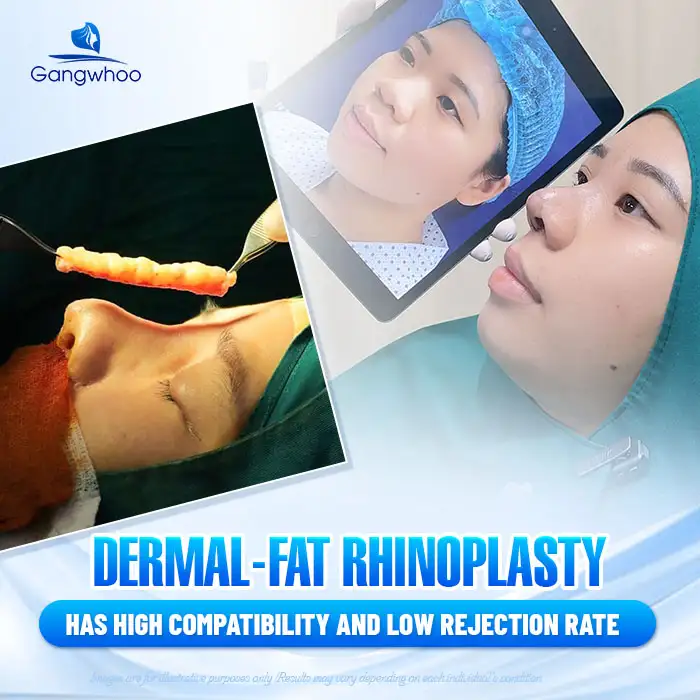
From a professional standpoint, this is an autologous tissue grafting technique that utilizes the body’s own biological tissue, so it has high compatibility and a low risk of rejection. However, dermal fat is inherently soft tissue that is prone to resorption and contraction over time, so its ability to maintain a long-term nasal shape is limited. This method is sometimes only suitable for cases that require soft tissue reconstruction of the nose or coverage of exposed artificial implants in revision rhinoplasty, rather than providing a high, well-defined, and durable nasal bridge like modern structural rhinoplasty techniques.
Advantages and disadvantages of dermal fat graft rhinoplasty
Advantages:
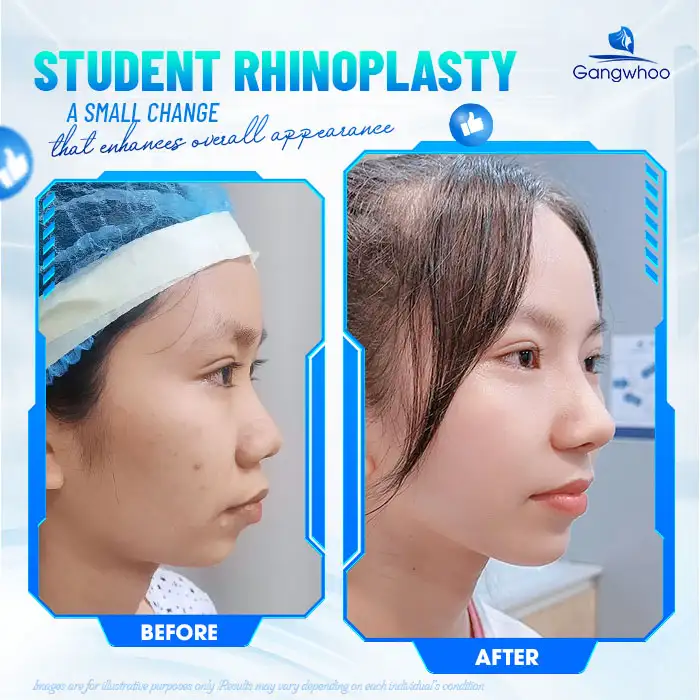
- High biological compatibility: Because it uses the patient’s own tissue, dermal fat graft rhinoplasty rarely causes allergic reactions, inflammation, or rejection.
- Effective for soft tissue improvement: Suitable for cases of nasal contracture, thin nasal tip skin, or the need to soften tissue after multiple surgeries.
- Basic level of safety: When performed by a qualified doctor, the harvesting and grafting of dermal fat tissue is relatively safe.
Disadvantages:
- Poor shaping ability: Dermal fat lacks the rigidity and elasticity of cartilage, so it cannot create a high, straight nasal bridge or a clearly defined natural curvature.
- High risk of tissue resorption: After several months, the dermal fat may be absorbed or contract, causing the nose to lose volume and the initial aesthetic effect to diminish.
- Short maintenance duration: On average, results last only about 6–12 months, whereas modern structural rhinoplasty technologies at Gangwhoo Cosmetic Hospital can last 10–20 years or even permanently.
- Not suitable for bridge augmentation: This method should only be applied to cover or soften tissue in the nasal tip area and is not suitable for patients who desire significant bridge augmentation or comprehensive nasal structural correction.
For these reasons, at Gangwhoo Cosmetic Hospital, the medical team does not recommend rhinoplasty using gluteal dermis as a primary method. Instead, the hospital currently applies advanced rhinoplasty technologies such as 4D structural rhinoplasty, 6D ultrasonic rhinoplasty, and autologous costal cartilage rhinoplasty, which help shape the nose according to ideal facial proportions, ensure safety, and provide long-lasting results.
Procedure for dermal fat graft rhinoplasty
Basically, the dermal fat graft rhinoplasty procedure includes five main steps:
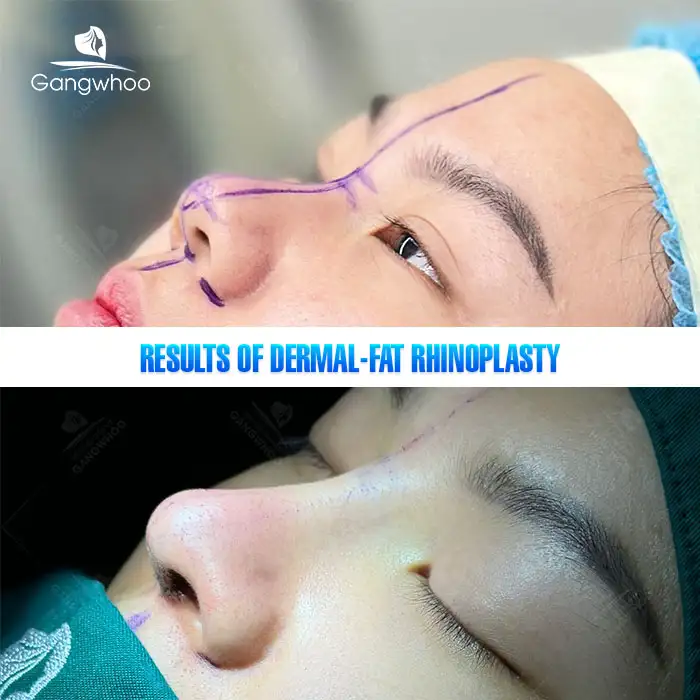
- Consultation and nasal assessment: The doctor evaluates skin thickness, existing defects, and the amount of tissue required for grafting.
- Local anesthesia and harvesting of dermal fat: The buttock or abdominal area is locally anesthetized, and an appropriate amount of skin–fat tissue is harvested.
- Tissue processing: The epidermal layer is removed, retaining only the dermis and fat, which are then cleansed and sterilized.
- Pocket creation and grafting into the nose: The doctor creates a subcutaneous pocket in the nasal area and grafts the dermal fat to reshape the nose as desired.
- Postoperative monitoring: After surgery, the patient must follow careful postoperative care to help the graft adhere well and reduce the risk of tissue resorption.
However, as mentioned by the doctor, this technique should only be applied in certain specific indications (for example, reconstructing thin nasal skin, covering exposed cartilage, or softening the nasal tip area after structural rhinoplasty). If you wish to have a high, beautiful, natural-looking, and long-lasting nasal bridge, the doctor recommends learning more about 4D structural rhinoplasty or costal cartilage rhinoplasty at Gangwhoo Cosmetic Hospital—where leading Korean rhinoplasty technologies are applied, ensuring safety, medical-standard compliance, and durable results.
If you are unsure which rhinoplasty method is most suitable for your facial structure, skin condition, and nasal tissues, you can visit Gangwhoo Cosmetic Hospital for a direct consultation and detailed advice from a specialized rhinoplasty doctor. Choosing the right technique from the beginning will help you achieve optimal aesthetic results that are safe and long-lasting over time.


