Hello, the doctor has received your question regarding septal perforation after rhinoplasty. This is a rare complication but one that needs to be properly understood and managed promptly. The nasal septum is the cartilage and bone tissue located between the two nostrils, playing an important role in maintaining nasal structure and regulating airflow during breathing. When it is damaged or perforated, it not only affects aesthetics but also impacts respiratory function. The doctor will help you clearly understand the causes, management approaches, and important considerations before undergoing rhinoplasty.
What causes septal perforation after rhinoplasty?
First of all, the doctor would like to emphasize that septal perforation after rhinoplasty is not common, but it can be very dangerous if not properly treated. There are three main groups of causes leading to this condition:
First – Incorrect or overly invasive surgical technique:
During rhinoplasty, especially with structural rhinoplasty or revision surgery after a previous procedure, the doctor often needs to harvest septal cartilage to build the columellar strut or reshape the nasal tip. If the dissection is too deep or insufficient supporting cartilage is preserved, the nasal septum can easily become thin and perforated. In some cases, damage may also occur due to excessive tissue compression, improper implant placement, or incorrect suturing layers.
- Second – Postoperative infection or necrosis:
After rhinoplasty, if proper hygiene is not maintained or low-quality synthetic cartilage is used, soft tissue infection in the nasal area may occur. Prolonged inflammation can destroy the cartilage tissue, thereby creating a perforation in the septum.
Third – Individual anatomy or underlying medical conditions:
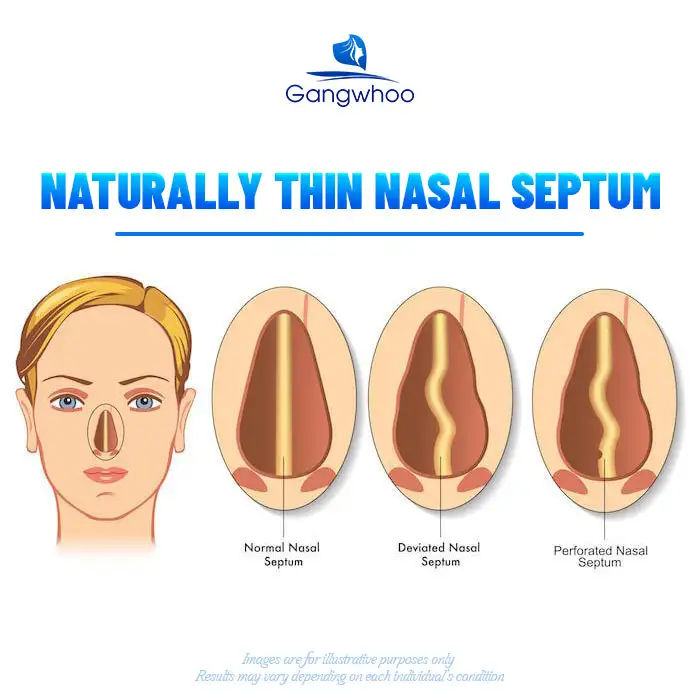
Some individuals have a congenitally thin nasal septum or a history of conditions such as chronic rhinitis, sinusitis, or septal cartilage inflammation, making them more susceptible to injury during surgical intervention. In addition, the use of weak autologous cartilage with insufficient durability can also cause septal perforation after a short period of time.
In summary, septal perforation after rhinoplasty usually stems from unsafe surgical techniques, substandard cartilage materials, or postoperative infection. Therefore, choosing a highly skilled surgeon and a hospital that meets medical standards is the key factor in preventing this complication.
How to manage septal perforation after rhinoplasty
If septal perforation unfortunately occurs after rhinoplasty, it is important not to delay or attempt self-treatment at home, as the longer it is left untreated, the more difficult recovery becomes.
Depending on the size and location of the perforation, the doctor will indicate an appropriate treatment method:
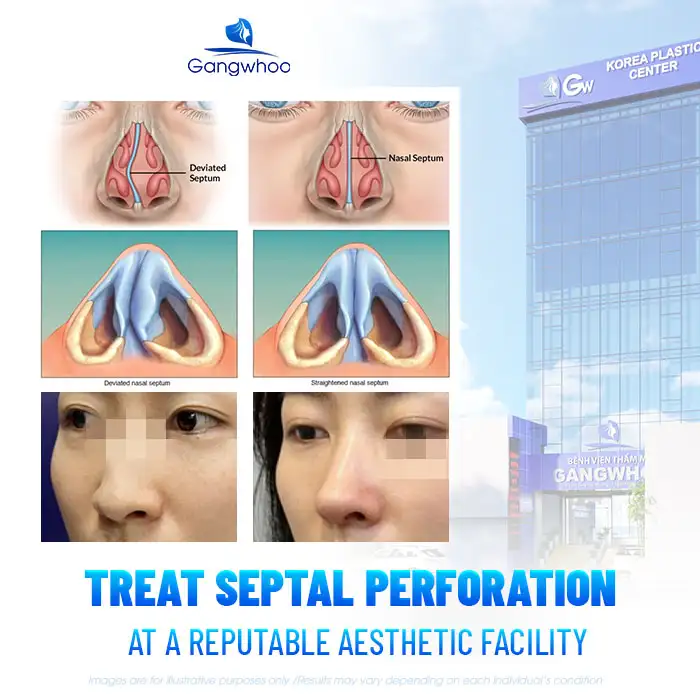
- Small perforations (<5 mm): These may be managed conservatively with anti-inflammatory and antibiotic medications, combined with daily nasal hygiene and periodic endoscopic monitoring.
- Moderate to large perforations: Surgical repair of the nasal septum using autologous cartilage tissue (usually harvested from the ear cartilage or rib cartilage) is required. This surgery helps restore structure, prevent bleeding, improve respiratory function, and protect the nasal shape.
- Perforation caused by infection or necrosis: The doctor will remove inflamed tissue, drain purulent fluid, and administer systemic antibiotics. Only after the tissue has completely stabilized will nasal reconstruction be considered.
In addition, patients should avoid nose picking, forceful nose blowing, or engaging in strenuous physical activities, as these can cause the perforation to enlarge.
At Gangwhoo Cosmetic Hospital, cases of rhinoplasty revision and septal perforation are thoroughly examined using modern nasal endoscopy systems, followed by personalized treatment plans tailored to each condition. With advanced microsurgical techniques and high-quality biocompatible cartilage, Gangwhoo helps close the perforation, restore nasal shape, and recover respiratory function safely while minimizing recurrence.
Important considerations before undergoing rhinoplasty
To prevent septal perforation after rhinoplasty, the doctor advises you to pay special attention to the following before proceeding:
- Choose a surgeon with certified expertise in rhinoplasty, extensive experience in structural rhinoplasty, and complication management.
- Undergo surgery at a hospital that meets Ministry of Health standards, with sterile operating rooms and strict infection control protocols.
- Discuss thoroughly with the doctor about the type of cartilage to be used (autologous, synthetic, or combined) to ensure biocompatibility and maximum safety.
- Do not undergo rhinoplasty if you are currently experiencing rhinitis, sinusitis, or are taking medications that affect blood clotting.
- After surgery, strictly follow postoperative care instructions and attend regular follow-up visits so the doctor can monitor recovery and promptly manage any abnormal signs.
Advice from the doctor:
Although septal perforation after rhinoplasty is rare, it can cause long-term consequences if not properly treated. If you suspect this condition or experience abnormal symptoms such as difficulty breathing, nosebleeds, or dryness and irritation inside the nasal cavity, you should visit Gangwhoo Cosmetic Hospital for endoscopic examination and specialized consultation.
At Gangwhoo, a team of leading specialists combined with advanced Korean rhinoplasty technologies will help resolve all rhinoplasty complications while ensuring that the new nasal shape remains safe, harmonious, and long-lasting over time.


