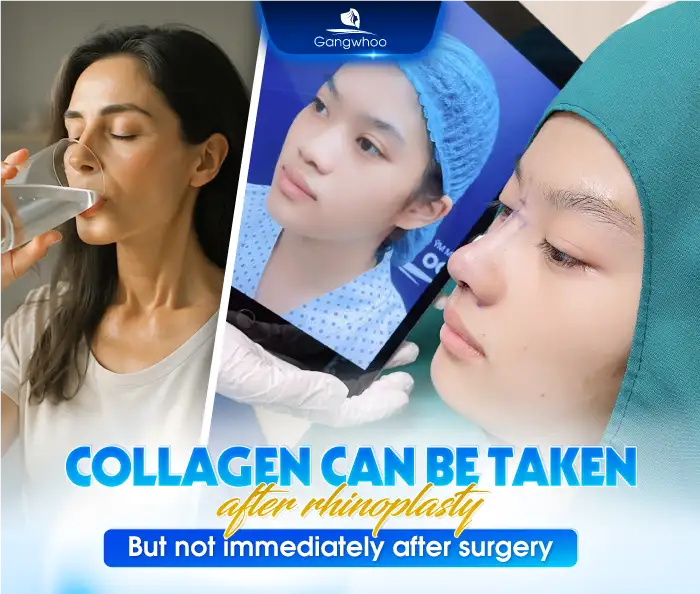
Can You Take Collagen After Rhinoplasty? Important Notes When Supplementing Collagen
Minh Phuong
Rhinoplasty
Asked: 28/01/2026
Doctor, may I ask whether it is possible to take collagen after rhinoplasty? I have heard many people say that collagen helps the skin and tissues recover faster, but others say it may affect the nasal shape after surgery. So in reality, should I take collagen, and what should I pay attention to when supplementing collagen during this period?
Hello, after undergoing rhinoplasty, postoperative care and nutritional supplementation play a very important role in helping the recovery process occur quickly, minimizing swelling, and ensuring that the nasal shape achieves natural and stable results. One of the most frequently asked questions that doctors receive is: “Can you take collagen after rhinoplasty?” Today, the doctor will provide a detailed explanation so that you can clearly understand and know how to care for yourself properly.
Can You Take Collagen After Rhinoplasty?
The answer is YES. You can absolutely take collagen after rhinoplasty; however, it should not be taken immediately after surgery. According to professional analysis, collagen is a structural protein that accounts for more than 70% of the skin, helping to increase elasticity, promote tissue regeneration, and support wound healing. However, in the early postoperative period (approximately the first 7–10 days), the body is forming new scar tissue and stabilizing the nasal structure. Therefore, supplementing collagen too early may affect tissue stabilization, cause prolonged swelling, or result in uneven wound healing.
It is possible to take collagen after rhinoplasty, but it should not be taken immediately
Therefore, doctors recommend starting collagen supplementation about 10–14 days after suture removal, when the nasal area has become relatively stable and swelling has significantly reduced. At this stage, collagen supplementation helps stimulate cell regeneration and improve skin elasticity in the nasal area, while also helping to smooth the skin and reduce the risk of scarring.
In addition, when choosing a product, you should prioritize collagen peptides or hydrolyzed collagen—these forms have smaller molecular sizes, are easier to absorb, and are safer for the body. If you are still uncertain about the timing and dosage, you should consult directly with a cosmetic surgery specialist for guidance tailored to your recovery condition.
Important Notes When Supplementing Collagen After Rhinoplasty
Once you have determined the appropriate time to supplement collagen, you should pay attention to the following points to achieve optimal effectiveness without affecting the nasal shape:
Consume collagen in moderation, approximately 2,500 to 5,000 mg per day after rhinoplasty
Do not overuse collagen: Take the recommended dosage (usually 2,500–5,000 mg/day). Excessive intake does not accelerate beauty benefits and may overload liver and kidney metabolism.
Take collagen in the evening before bedtime: This is when the body regenerates most actively, allowing collagen to work most effectively.
Combine with a balanced diet: Collagen requires vitamin C for metabolism, so you should consume citrus fruits, guava, or dark green vegetables.
Choose products with clear origins: Select reputable brands and avoid unverified products, as they may contain impurities or preservatives that can irritate the skin.
Doctors also note that although collagen provides excellent support for skin health and recovery, it cannot completely replace proper postoperative care. You still need to maintain nasal hygiene, avoid touching the nose, avoid sleeping on your side, and follow scheduled follow-up visits at the hospital to ensure stable and long-lasting rhinoplasty results.
Other Considerations When Using Dietary Supplements After Rhinoplasty
In addition to collagen, many people have the habit of using multivitamins, zinc supplements, Omega-3, or skin beauty supplements. However, not all supplements are suitable immediately after surgery.
Do not combine multiple dietary supplements without consulting a medical specialist
Avoid products containing Omega-3 or vitamin E during the first 7 days, as these substances may thin the blood, leading to wound bleeding or prolonged recovery.
Do not combine multiple dietary supplements on your own without consulting a doctor, as interactions or side effects may occur.
Focus on a natural diet rich in protein and green vegetables, as this provides nutrients that support natural tissue regeneration and is safer than overusing supplements.
If you undergo rhinoplasty at Gangwhoo Cosmetic Hospital, doctors will directly monitor your recovery and provide detailed guidance on nutritional supplementation, helping you recover quickly, achieve a natural-looking nose, and avoid complications. Gangwhoo currently applies advanced rhinoplasty technologies such as autologous cartilage structural rhinoplasty, S-Line, L-Line 3D, and exclusive High Line techniques, delivering optimal aesthetic results and long-term safety for patients.
In summary, regarding the question “Can you take collagen after rhinoplasty?”—the answer is yes, but it must be done at the right time and in the right way. If you would like more specific advice on collagen supplementation, dietary supplements, or postoperative care after rhinoplasty, you can contact the doctors at Gangwhoo Cosmetic Hospital directly for detailed, safe, and personalized guidance.
Hello Doctor, I am considering rhinoplasty to improve the shape of my nose because my nose is quite low and the tip is slightly wide, making my overall facial features look less harmonious. However, after researching, I found that there are many cosmetic hospitals and spas advertising rhinoplasty services, so I am quite confused about […]
I’ve heard that nowadays there are Nano breast implants without identification chips, which are different from implants with embedded chips. Doctor, could you explain exactly what Nano implants without chips are, what their advantages and disadvantages are, and whether I should choose this type? I’m a bit concerned about having a “chip” inside my body, […]
Doctor, after my rhinoplasty, I noticed that the tip of my nose feels a bit hard compared to normal, and it feels quite uncomfortable. I don’t know what causes this or whether it is a normal condition or an abnormal sign that requires a medical check-up. If this is a normal condition, what should I […]
I am interested in endoscopic breast augmentation because I’ve heard it is gentler than traditional methods. However, I am still a bit afraid of pain and concerned about risks after surgery. Doctor, could you tell me whether endoscopic breast augmentation is painful, what the procedure involves, and what should be noted after surgery to recover […]
Hello Doctor, I just underwent a rhinoplasty and am very concerned about post-operative care. Could you please advise me on the correct and scientific way to care for my nose after surgery so that it recovers quickly, reduces swelling and pain, and avoids complications? Additionally, I would like to know any important precautions during the […]
I am learning about nasal surgery and have seen many people share that rhinoplasty not only enhances beauty but also helps the face look more refined and boosts confidence. So, doctor, could you please share the practical benefits of rhinoplasty, and whether it is worth considering if my nose is slightly low but still balanced?